Does sunscreen expire? How to Tell and What to Do About It
That tube in the back of the bathroom cupboard. The one from last summer. Maybe the summer before that. You squeeze a bit out, give it a sniff, and wonder: is this still going to do its job?
Short answer: sunscreen does expire, and when it does, it stops protecting you properly.
How to tell your sunscreen has gone off
-
It's changed texture.
If the formula has separated, gone watery, or feels gritty or lumpy, the ingredients have started to break down. It won't spread evenly, and uneven coverage means uneven protection.
-
It looks different.
A noticeable colour change, particularly yellowing, is a sign the formula has oxidised. It's not going to perform the way it should.
-
It smells off.
Sunscreen doesn't smell amazing at the best of times, but if it smells noticeably different from when you bought it, the preservatives have likely broken down.
Any one of these is enough reason to replace it. If you're not sure, replace it anyway. A fresh tube costs a lot less than a bad sunburn.
How to check if your sunscreen has expired
Find the date on your tube or bottle. It's usually printed or embossed on the crimp, the base, or the back label. If it hasn't passed, you're good. If it has, replace it.
In Australia, sunscreens are regulated as therapeutic goods by the TGA. That means every sunscreen sold here is required to carry an expiry or use-by date on the packaging. The manufacturer has to back that date with stability testing, so it's not a guess. If you can find the expiry date, trust it. If you can't read it anymore because the print has rubbed off, it's probably time for a new one anyway.
What happens if you use expired sunscreen?
Expired sunscreen isn't dangerous in the way expired food can be. It's unlikely to cause a reaction for most people, though those with sensitive skin might notice some irritation.
The real problem is simpler: it doesn't work properly. The active ingredients that help protect against UVA and UVB radiation break down over time. That means you could spend a full day outdoors thinking you're covered, and end up burnt.
Expired sunscreen is worse than no sunscreen in one specific way: it gives you a false sense of security. You stay out longer because you think you're protected. You skip the hat. You don't seek shade. And the sunburn you get is the kind you wouldn't have risked if you'd known you had no protection at all.
Keep it below 30°C
This is the TGA's recommended storage condition for sunscreens at room temperature. A bathroom shelf or bedroom drawer is fine. The glove box of your car in January is not.
Keep it out of direct sunlight
UV radiation breaks down the very ingredients designed to protect you from it. If you're at the beach, keep the tube in your bag or wrapped in a towel, not sitting on the sand baking in the sun.
Close the lid
Oxygen exposure speeds up degradation. It also lets sand and grit into the tube, which nobody wants.
Don't leave it in the car
This is a big one. A parked car in Australian summer can hit 60°C or more inside. That will cook a sunscreen formula faster than anything else. If you need sunscreen in the car for work, keep a tube in an insulated bag or replace it regularly.
When to just buy a new one
If you're using sunscreen the way it's designed to be used, expiry shouldn't really be a problem. A 200ml tube, applied properly and reapplied every two hours during sun exposure, will be used up well before it expires.
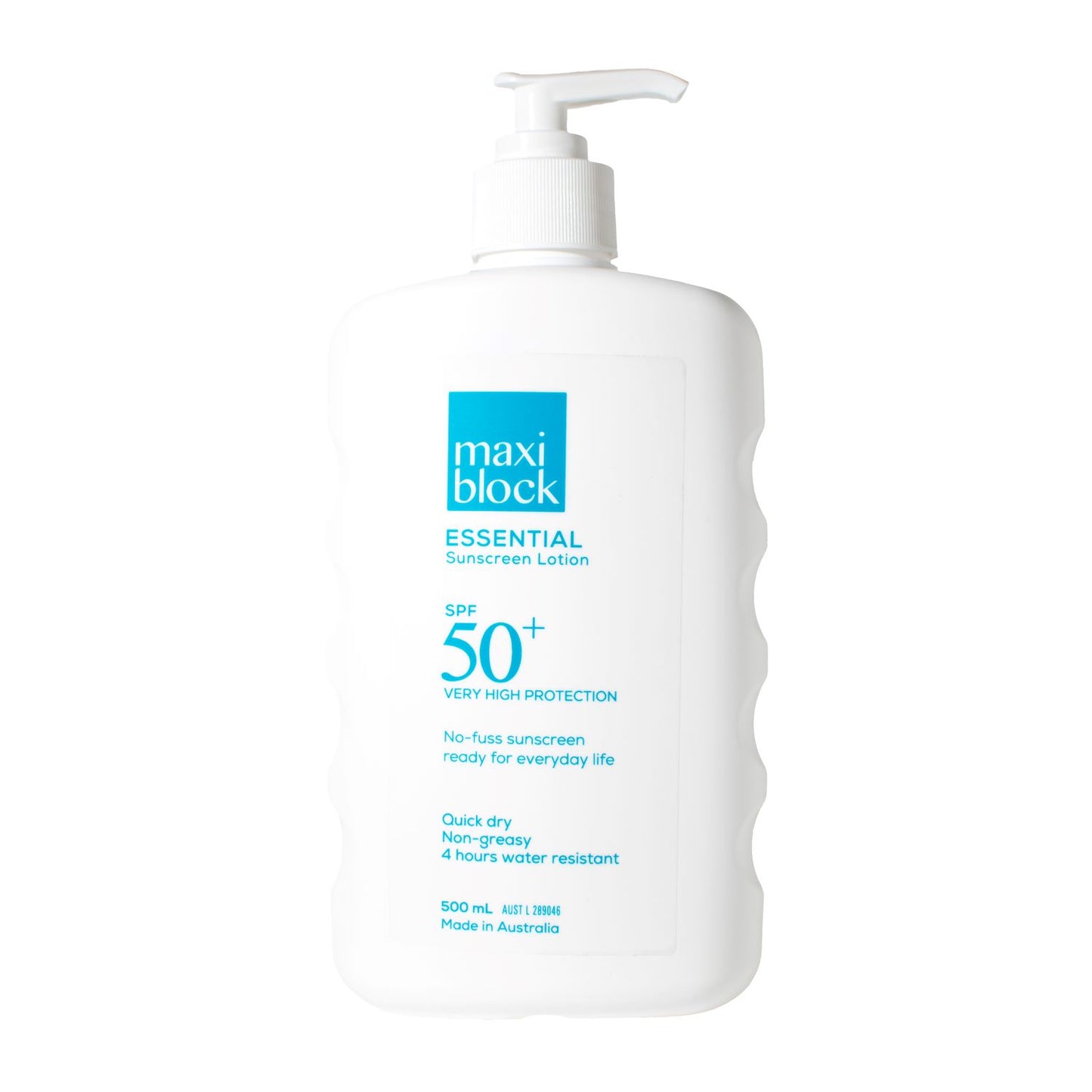
The bottles that expire are usually the ones that barely get used. The ones that get applied once at the start of the day and then forgotten. So if you've found an old tube and you're reading this article to figure out whether it's still good, that might be worth thinking about. The best sunscreen is the one you actually use, regularly, and in the right amount, something like Maxiblock Essential SPF 50+.
Common questions about sunscreen expiry
Can I use expired sunscreen if it's all I have?
It's better than nothing, but not by much. If the sunscreen is only a month or two past the date and has been stored in a cool, dark spot, it may still offer some protection. But if it's been sitting in a hot car or the texture has changed, treat it as if it's not there. Cover up, find shade, and pick up a fresh tube when you can.
Does sunscreen go bad faster in the heat?
Yes. Heat is the fastest way to degrade a sunscreen formula. The TGA recommends storing sunscreen below 30°C. A parked car in Australian summer can easily double that. If your tube has spent a full day on the dashboard or in a hot boot, it's worth replacing even if the expiry date hasn't passed.
How do I find the expiry date on my sunscreen?
In Australia, all sunscreens regulated by the TGA are required to have an expiry or use-by date on the packaging. Check the crimp at the top of a tube, the base of a bottle, or the back label. If the print has worn off and you can't remember when you bought it, replace it.
Does it matter if the sunscreen has been opened or not?
Not as much as you'd think. An unopened tube stored properly should be fine until the expiry date. An opened tube stored properly is also fine, the active ingredients don't break down faster just because the seal has been cracked. What matters more is where it's been stored and whether the lid has been left off.
Is expired sunscreen bad for your skin?
For most people, no. Expired sunscreen is unlikely to cause irritation or a reaction on its own. The risk is what it doesn't do. Expired sunscreen may not protect you properly against UV radiation, which means you could burn without realising your protection has dropped.
Essential Everyday Sunscreen SPF 50+